
Translation of the French article published on the ASNFD website. The statements and perspective of the source text have been retained.
Switzerland is internationally recognized for its progressive integration of complementary medicine into its healthcare system. Since 2015, the Federal Diploma in Naturopathy has provided a nationally recognized qualification that certifies a high level of professional education and clinical competence.
Yet one important question remains:
Should federally certified naturopaths be allowed to administer certain basic injectable medicines within a regulated, safe, and supervised framework?
A newly published White Paper examines this issue from both a legal and professional perspective and concludes that Swiss federal law already provides a legal basis for such authorization.
A Practical and Safe Proposal
The White Paper does not call for unrestricted prescribing rights.
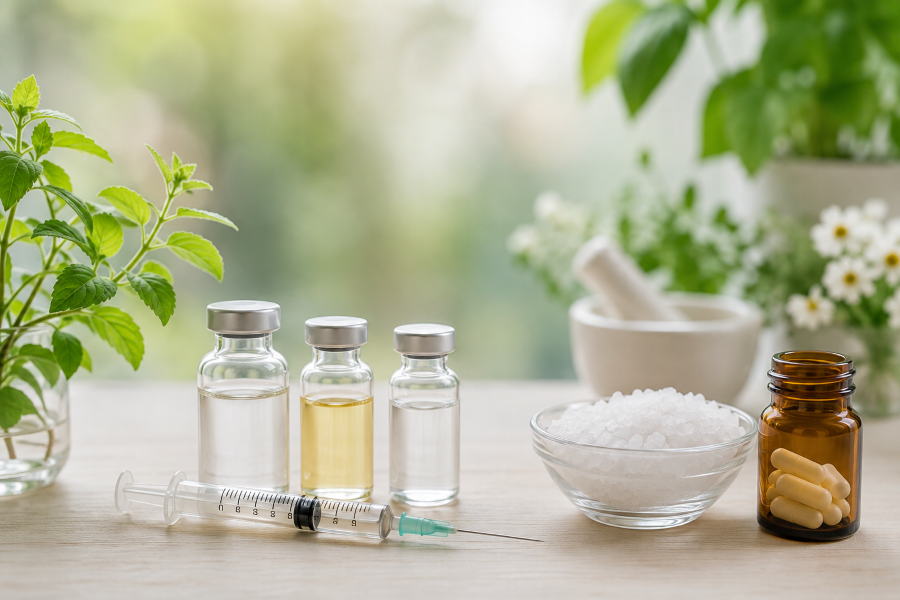
Instead, it proposes a cantonal pilot program limited to three injectable products with well-established safety profiles:
- Physiological saline (0.9% NaCl)
- Injectable Vitamin C
- Injectable Magnesium
The proposal recommends that their administration be permitted only under clearly defined conditions, including:
- Individual cantonal authorization
- Certified training in injection techniques
- Standardized clinical protocols
- Complete treatment documentation
- Regular medical supervision
- Annual evaluation by cantonal authorities
What Does Article 52 of the Swiss Medicines Ordinance Provide?
One of the key arguments presented in the White Paper concerns Article 52 of the Swiss Medicines Ordinance (OMéD).
This provision allows cantons to authorize certain healthcare professionals—including federally certified naturopaths referred to in Article 49—to administer prescription medicines under their own professional responsibility.
According to the White Paper, this legal mechanism already exists but has not yet been fully implemented for basic injectable medicines such as physiological saline, Vitamin C, and magnesium.
Professional Competencies Already Recognized
The White Paper also highlights that federally certified naturopaths already receive extensive practical training in invasive therapeutic procedures.
These include:
- Acupuncture
- Scarified cupping
- Autohemotherapy
- Baunscheidt therapy
- Hirudotherapy (medicinal leech therapy)
These procedures require advanced knowledge of anatomy, aseptic technique, sterilization, and patient safety.
The White Paper therefore argues that administering sterile solutions such as saline, Vitamin C, or magnesium—following additional certified injection training—is technically less complex than several procedures already included in the federally recognized curriculum.
Patient Safety Comes First
Patient safety is the cornerstone of the proposed framework.
The pilot program includes:
- Comprehensive patient assessment before every treatment
- Standardized dosage protocols
- Mandatory treatment records
- Regular medical supervision
- Appropriate professional liability insurance
- Monitoring and reporting of any adverse events.
The objective is not to reduce safety standards, but rather to establish a transparent and well-regulated framework that ensures responsible clinical practice.
Why a Cantonal Pilot Program?
Rather than introducing immediate nationwide reform, the White Paper recommends launching a 24- to 36-month pilot program in one or more interested cantons.
Such a pilot would provide valuable real-world evidence regarding:
- Patient safety
- Clinical outcomes
- Organizational feasibility
- Potential benefits for the healthcare system
The resulting data could help inform future healthcare policy at both cantonal and federal levels.
Encouraging a Constructive Dialogue
Complementary medicine continues to evolve and plays an increasingly important role for many people in Switzerland.
Regardless of differing opinions on the proposal, the White Paper offers a structured discussion based on federal legislation, recognized professional competencies, and public health considerations.
It encourages constructive dialogue among:
- Cantonal health authorities
- Physicians
- Federally certified naturopaths
- Professional associations
- Policymakers
At the center of this discussion remain patient safety, quality of care, and the responsible development of Switzerland’s healthcare system.
Read the Full White Paper
The complete White Paper provides an in-depth analysis of:
- The legal framework established by Article 52 of the Swiss Medicines Ordinance
- The professional competencies of federally certified naturopaths
- Patient safety considerations
- A comprehensive cantonal pilot program
- Recommendations for cantons, professional associations, and healthcare authorities.