
Translation of the French article published on the ASNFD website. The statements and perspective of the source text have been retained.
Questioning a familiar belief
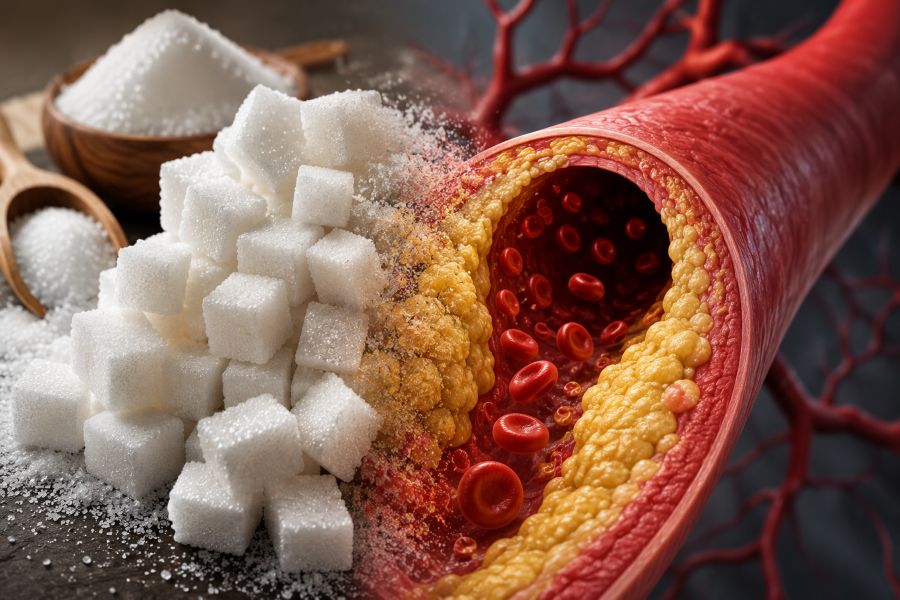
For more than fifty years, cholesterol has often been presented as the main cause of cardiovascular disease. Millions watch their levels anxiously, avoid certain foods and sometimes take medicines to lower them. Yet increasing numbers of researchers are interested in a less conspicuous factor: sugar. What if the real problem were not only circulating cholesterol, but the damage caused by chronic excess sugar?
Sugar is everywhere
It is not found only in desserts. It also appears in breakfast cereals, sugary drinks, flavoured yoghurts, industrial sauces, ready meals and reduced-fat products. Some people consume several dozen teaspoons daily without realising.
What happens when we consume too much?
After a meal rich in fast-absorbed sugars, blood glucose rises quickly. The pancreas produces insulin to maintain balance. This is normal in the short term, but when repeated several times daily for years it can promote insulin resistance, weight gain, chronic inflammation, increased triglycerides, type 2 diabetes and certain cardiovascular diseases.
Inflammation: the often-forgotten factor
Cardiovascular disease involves more than lipid accumulation: complex inflammatory processes also contribute. A diet rich in refined sugars may promote chronic low-grade inflammation that progressively affects blood vessels. Like a silent fire, inflammation can weaken tissues for years before symptoms appear.
Metabolic syndrome: a disease of the modern world
More people are developing metabolic syndrome, characterised by increased waist circumference, high blood glucose, high blood pressure, raised triglycerides and low HDL. This pattern is strongly associated with excessive sugar and ultra-processed food consumption.
Why were traditional populations better protected?
Many traditional populations ate substantial amounts of natural fats while experiencing little cardiovascular disease. Their distinguishing features were not necessarily fat intake, but an absence of ultra-processed foods, low refined-sugar consumption, regular activity and nutrient-rich diets. Cardiovascular health depends on multiple factors rather than one nutrient.
The role of micronutrition
A modern diet high in calories but low in micronutrients may contribute to significant metabolic imbalances. Magnesium, chromium, B vitamins, vitamin C and many other micronutrients help regulate energy metabolism. When they are lacking, the body’s ability to handle glucose efficiently may be impaired.
Should cholesterol be ignored?
Certainly not. It remains an important marker within an overall assessment of cardiovascular risk, but it is only one piece of the puzzle. Inflammation, blood glucose, insulin resistance, stress, activity, sleep and micronutrient status also play major roles.
A more complete approach to prevention
Modern cardiovascular prevention is about more than monitoring one number in a blood test. It relies on natural, minimally processed foods, limiting refined sugars, regular physical activity, good stress management, restorative sleep and optimal micronutrient intake.
Conclusion
Perhaps the debate should not pit cholesterol against sugar. The real question is how to understand the mechanisms promoting inflammation, metabolic imbalances and chronic disease. Our bodies are designed for natural, nutrient-rich foods and few ultra-processed products. What if the first step towards better cardiovascular health were simply to look at what is actually on our plates?