
Translation of the French article published on the ASNFD website. The statements and perspective of the source text have been retained.
Cholesterol: a molecule essential to life
For decades cholesterol has had an often oversimplified reputation. Yet it is essential to the body. As a fundamental component of cell membranes, it ensures their fluidity, integrity and function. It is also a precursor to steroid hormones including cortisol for the stress response; testosterone for muscle mass, energy and libido; oestrogens and progesterone for female hormonal balance; aldosterone for blood-pressure regulation; and DHEA, often associated with immune function and healthy ageing.
Cholesterol also contributes to vitamin D synthesis and production of bile acids needed to digest and absorb dietary fats.
A major role in the brain
The brain contains almost a quarter of the body’s total cholesterol. It helps form myelin, which protects nerve fibres, and maintains synapses and communication between neurons. Significant deficiency may be associated with cognitive problems, memory changes or mood disturbances. As often in physiology, balance matters more than excess or deficiency.
Where does cholesterol come from?
About two thirds are synthesised by the body, mainly in the liver, while only one third comes from food. It is therefore not a foreign substance to eliminate, but a molecule naturally produced and regulated by the body.
Despite progressively lower average LDL levels in many Western countries over several decades, cardiovascular diseases remain leading causes of death. This observation suggests that other biological and environmental factors also contribute.
Statins: benefits and limitations
Statins are among the world’s most prescribed medicines. They reduce liver cholesterol synthesis and generally lower LDL effectively. Their benefit in people at high cardiovascular risk or with a previous cardiac event is well documented. Their role in primary prevention, however, remains scientifically debated.
Like any treatment, they may have adverse effects, including muscle pain, muscle weakness, fatigue, memory or concentration problems in some patients, and increased diabetes risk in predisposed people. An individualised approach remains essential.
The example of traditional populations
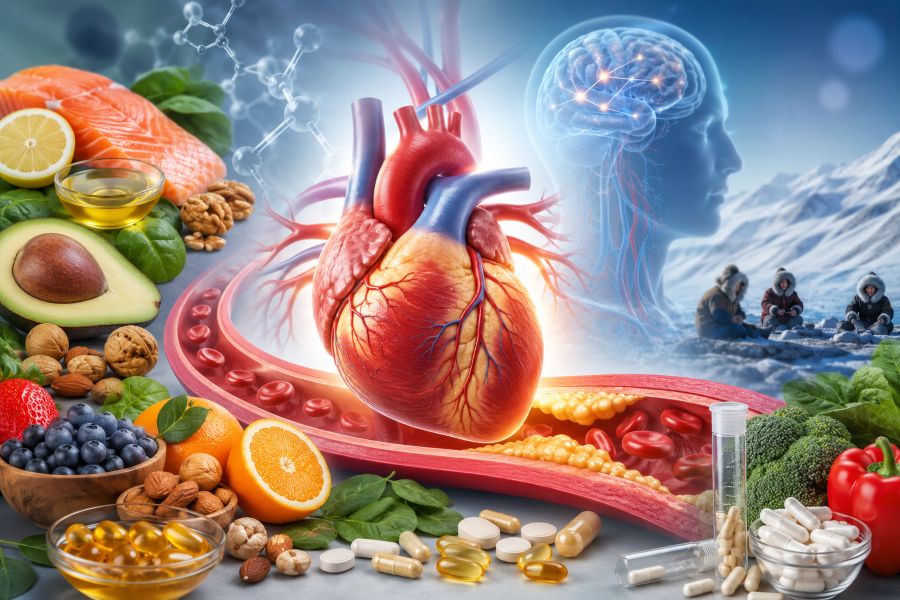
Some traditional populations, particularly Inuit communities, historically had relatively low cardiovascular disease rates despite diets rich in animal products. Researchers consequently examined other protective factors: high marine omega-3 intake, few ultra-processed foods, daily activity, genetic factors and the overall living environment. Cardiovascular risk cannot be reduced to blood cholesterol alone.
Lipoprotein(a): an often-overlooked risk factor
Lipoprotein(a), or Lp(a), resembles LDL and its concentration is largely genetically determined. Many studies associate elevated levels with increased risks of atherosclerosis, heart attack and stroke.
Some hypotheses, developed notably by Linus Pauling and Matthias Rath, suggest that Lp(a) may also contribute to repair when artery walls are weakened. This theory highlights a potential role for vitamin C in maintaining arterial collagen integrity. Although the approach remains disputed within the scientific community, it has broadened discussion of cardiovascular mechanisms.
Vitamin C and vascular integrity
Vitamin C is essential for synthesising collagen, a major structural protein in blood vessels. Severe deficiency causes scurvy, characterised in part by marked vascular fragility. Experimental work by Matthias Rath, Aleksandra Niedzwiecki and colleagues showed that deficiency could promote certain vascular changes in genetically modified animal models. These findings supported the hypothesis that micronutrient status might influence processes related to atherosclerosis.
Homocysteine: an important cardiovascular marker
Homocysteine is an amino acid produced during methionine metabolism. Raised blood levels may contribute to vascular inflammation, lipid oxidation and endothelial dysfunction. Vitamins B6, B9 (folate) and B12 are essential to its metabolism. Insufficient intake may cause accumulation and increase cardiovascular risk. Measurement provides an interesting complementary tool in overall risk assessment.
The orthomolecular medicine perspective
Developed notably by Linus Pauling and further explored by Dr Matthias Rath, orthomolecular medicine holds that cells require optimal amounts of vitamins, minerals, amino acids and other micronutrients to function effectively. It emphasises correcting nutritional deficits that might contribute to many chronic conditions. From this perspective, optimising vitamin C, B vitamins, lysine, proline and other nutrients is a potential way to support cardiovascular health.
A broader view of cardiovascular risk
Current knowledge shows that cardiovascular diseases result from complex interactions among chronic inflammation, oxidative stress, metabolic imbalances, hypertension, diabetes, smoking, genetics, diet quality, micronutrient status, physical activity and sleep quality. Cholesterol is one element of the equation but cannot alone explain the entire phenomenon.
Conclusion
Cholesterol is essential to cell structure, hormone production, brain function and digestion. A modern approach looks beyond a simplistic distinction between good and bad cholesterol to consider all biological factors, including inflammation, Lp(a), homocysteine, micronutrient deficits and overall lifestyle. The most effective prevention probably rests on an integrative strategy combining quality food, regular activity, stress management, correction of nutritional deficiencies and individual medical follow-up.