Translation of the French article published on the ASNFD website. The statements and perspective of the source text have been retained.
Simple techniques for calm, energy and inner balance
Stress is one of the greatest challenges of our time. Mental overload, physical tension and emotional fatigue constantly challenge the nervous system. Fortunately, conscious breathing is a natural, powerful and accessible tool. Learning to breathe better can calm the mind, reduce anxiety, improve sleep and restore vitality. Here are five exercises inspired by modern therapeutic approaches and naturopathic techniques.
Why breathing directly influences stress
Breathing directly affects the autonomic nervous system, responsible for stress and relaxation responses. Under stress, breathing becomes rapid and shallow, heart rate rises and muscle tension develops. Slow, conscious breathing instead activates the parasympathetic system, calms the body, improves concentration and reduces production of the stress hormone cortisol. Breathing techniques are therefore used in stress management, body therapies, naturopathy, mindfulness and mental and sports preparation.
1. Deep abdominal breathing
The simplest exercise for calming the nervous system
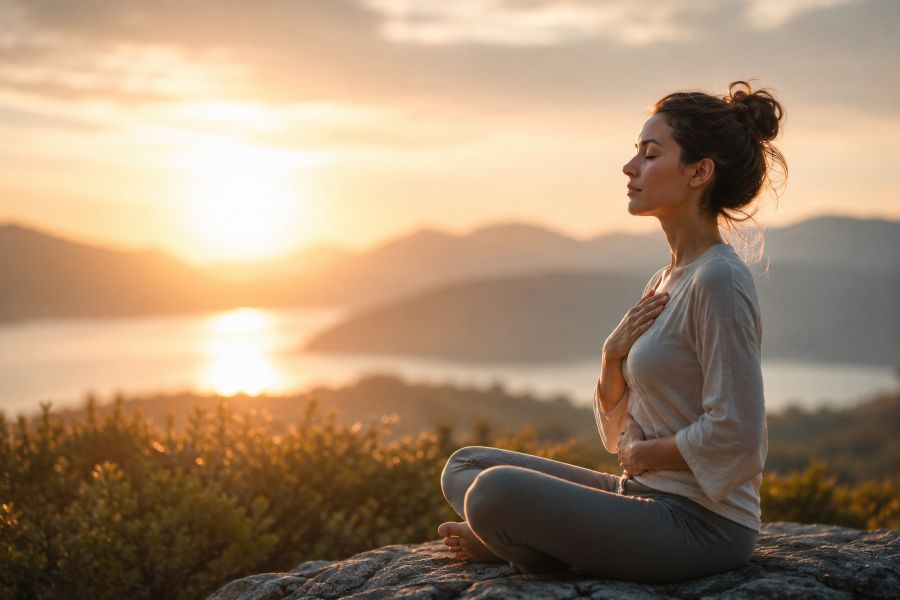
Abdominal breathing helps slow the heart rate immediately and promotes deep relaxation.
- Place one hand on your abdomen.
- Inhale slowly through your nose for four seconds.
- Expand your abdomen without raising your shoulders.
- Exhale gently for six seconds.
- Repeat for five minutes.
Benefits listed: rapid stress reduction, improved oxygenation, reduced muscle tension and better sleep.
2. Cardiac coherence
A scientifically recognised technique
Widely used in modern therapeutic approaches, cardiac coherence harmonises breathing and heart rhythm. The 365 method means three times a day, six breaths per minute, for five minutes. Inhale for five seconds and exhale for five, keeping a smooth, regular rhythm. Benefits listed include reduced anxiety, improved concentration and emotional regulation, and lower cortisol.
3. Buteyko breathing
Breathing less to breathe better
Buteyko is a recognised breathing technique intended to reduce chronic hyperventilation often associated with stress. Breathing too quickly tires the nervous system and reduces the quality of cellular oxygenation.
- Breathe calmly through your nose.
- Slightly reduce breathing volume.
- Aim for gentle, silent breathing.
- Continue for three to five minutes.
Benefits listed: greater mental calm, reduced breathlessness, better concentration and help managing anxiety.
4. Alternate-nostril breathing (Nadi Shodhana)
A therapeutic yoga practice
This technique helps balance the nervous system and calm intrusive thoughts.
- Close your right nostril with your thumb.
- Inhale through the left nostril.
- Close the left nostril.
- Exhale through the right.
- Inhale through the right.
- Exhale through the left.
- Continue for three to five minutes.
Benefits listed include emotional balance, mental clarity, reduced mental stress and deep relaxation.
5. Wim Hof breathing
A dynamic method for mental strength
Popularised by Wim Hof, this technique combines deep breathing with gradual cold exposure.
- Take thirty deep breaths.
- Exhale completely.
- Hold your breath for a few seconds.
- Take another deep breath.
Warning from the original: practise seated, or with someone accompanying you during your first experiences. Benefits listed include increased energy, stress resilience, immune stimulation and vitality.
Integrating the techniques into daily life
For lasting results, practise five to ten minutes daily, establish a regular routine, choose a quiet environment and progress gradually. Even a few minutes each day can profoundly change your physical and emotional state.
Training in therapeutic breathing techniques
Breathing exercises feature in naturopathy, body therapies, stress management, emotional support and health coaching. ASNFD’s immersive training introduces practical experience of the Wim Hof method, Buteyko breathing, modern therapeutic body techniques and approaches that can be applied immediately.
Conclusion
Breathing is natural, but breathing well can be learned. In a world of widespread stress, breathing techniques are simple, powerful and accessible tools for balance, energy and calm. A few minutes of conscious breathing daily can bring lasting improvements in wellbeing, mental health and quality of life.
Frequently asked questions
What is the best breathing technique for stress?
Cardiac coherence and abdominal breathing are among the most effective and accessible.
How long should you practise?
Five to ten minutes daily are enough to feel benefits.
Can you learn alone?
Yes, although guided training deepens practice and helps avoid errors.
Are breathing techniques recognised?
Yes. Many scientific studies show positive effects on stress, sleep and the nervous system.